The Covered Passages near the Opéra: a Stroll Through Time
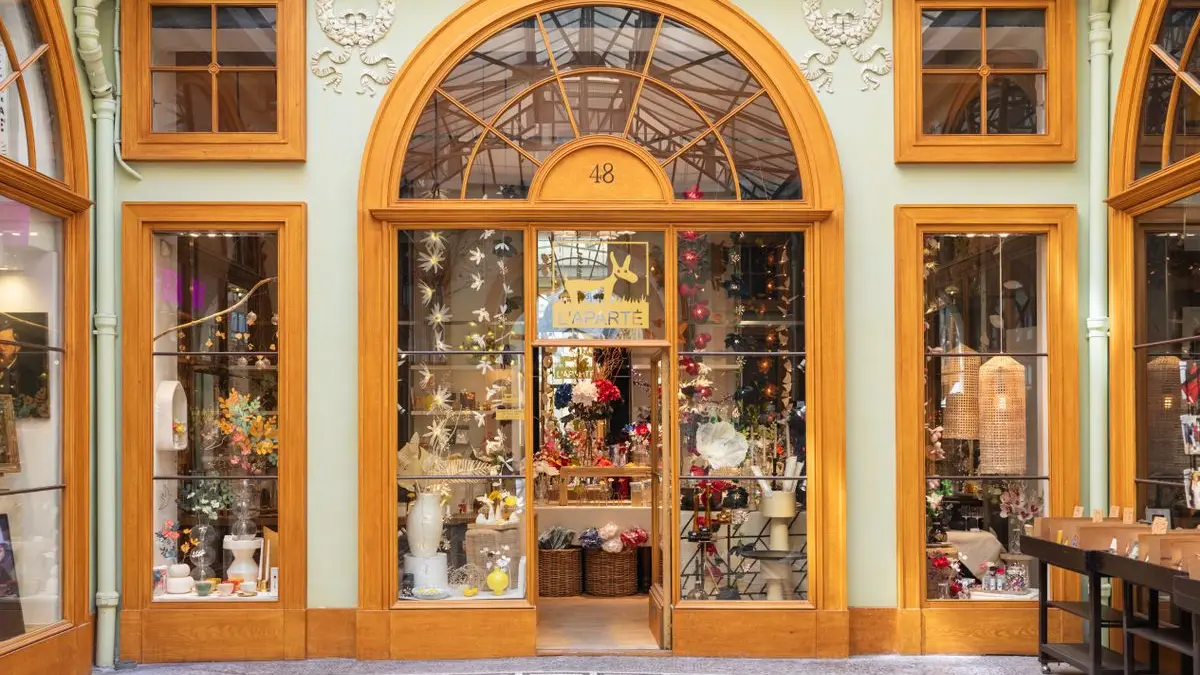
A short walk from the Opéra Garnier and the Grands Boulevards, a maze of glass-roofed arcades has sailed through the nineteenth century with its charm intact. Panoramas, Jouffroy and Verdeau: three covered passages you can wander through in a single morning. Follow the guide, sheltered from the rain and the bustle of the boulevards.
How Paris invented the covered passage
Before Baron Haussmann reshaped the capital, Paris was a city of dark, muddy, crowded lanes. The covered passages, first appearing in the late eighteenth century and multiplying under the Restoration and the July Monarchy, brought Parisians a quiet revolution: the chance to walk on mosaic or paved floors, sheltered from the weather, beneath a glass roof that let the daylight in.
These privately built galleries, cut through blocks of buildings, blended shopping, promenading and social life. Milliners, engravers, restaurateurs and reading rooms shared the same roof. Lit by gas from the 1820s, often among the very first places in the city to be so, they embodied the modern spirit of a middle class that loved to stroll and to be seen.
The area around the Opéra and the Grands Boulevards holds the finest surviving examples. Once numbering more than a hundred, only around twenty remain today, and three of them line up almost end to end on either side of the Boulevard Montmartre.
Passage des Panoramas, the lively elder
Opened in 1799, the Passage des Panoramas is among the oldest in Paris. Its name comes from the two rotundas that once stood at its entrance on the Boulevard Montmartre, displaying vast circular paintings: painted panoramas that immersed the visitor in a view of a city or a battle, distant ancestors of today’s wraparound screens.
The passage now hums with a thoroughly modern energy. Stamp collectors and dealers in old postcards rub shoulders with a remarkable cluster of bistros and food-loving tables. You lunch elbow to elbow, hunt down a rare stamp, and glance up at engraved shopfront signs from another century, lovingly preserved.
It is the most animated of the trio: perfect for beginning the walk in late morning, when the covered terraces come alive and the light slants low beneath the glass roof.
Passage Jouffroy and the Musée Grévin
On the far side of the Boulevard Montmartre opens the Passage Jouffroy, inaugurated in 1847. It was the first Paris passage built entirely of iron and glass, and one of the first to have underfloor heating. Its elegant glass canopy and tiled floor give it a refined air that has changed little since the Romantic era.
You enter beneath a tall archway, under the gaze of visitors to the Musée Grévin, whose historic entrance opens onto the passage. The famous waxwork museum, founded in 1882, makes this a favourite stop for families. Antique toy shops, a bookshop devoted to cinema, a dealer in walking sticks and curiosities: every window tells a story.
Passage Jouffroy is also a haven for those seeking calm. You wander more slowly here than in the Panoramas, linger before a shopfront, and push open the door of a tearoom for an old-fashioned pause.
Passage Verdeau, a bibliophile’s secret
Just beyond Jouffroy, across a short stretch of street, the Passage Verdeau brings the walk to a lovely close. Also opened in 1847, it is the most discreet of the three, and perhaps the most poetic, with its saw-tooth glass roof that floods the gallery with soft light.
This is the realm of secondhand booksellers, print dealers and hunters of old engravings. You rummage through the boxes, unearth a period postcard, an old map of Paris or a bound volume. Time seems suspended here, far from the bustle of the nearby Galeries Lafayette.
To finish here is to grant yourself a breath of quiet. Passage Verdeau rewards the curious walker who has pushed the exploration all the way to the end, where hurried visitors do not always venture.
Booksellers, tearooms and the art of the flâneur
What makes these three passages unforgettable is their atmosphere: a Parisian way of living that refuses to hurry. Beneath the glass roofs you slow your pace, sit at a bistro table, turn the pages of an old book before moving on. The tearooms and cafés keep alive a hushed hospitality that invites long conversations.
Food shops and craftspeople here resist the sameness of the high street. Booksellers, stamp dealers, engravers and sellers of curiosities: these labours of love give the galleries a soul the big chains on the boulevards simply do not have.
Take a moment to look up: floor mosaics, painted signs, ironwork and antique clocks form a setting of rare coherence. Every detail speaks of a Paris that knew how to turn commerce into spectacle.
A practical walk from the Opéra
The ideal starting point lies around the Opéra Garnier, Charles Garnier’s masterpiece crowned by its ceiling painted by Marc Chagall. From there you reach the Grands Boulevards on foot along the Boulevard des Capucines, then the Boulevard Montmartre, where our three passages line up. Allow a morning to savour it all without rushing.
The district is superbly served: the Grands Boulevards station links métro lines 8 and 9, Richelieu – Drouot serves lines 8 and 9, and Opéra connects lines 3, 7 and 8. The Galeries Lafayette, with their stained-glass dome of 1912 on the Boulevard Haussmann, sit a few minutes’ walk away should you wish to extend the day.
A guide’s tip: aim for late morning or a weekday afternoon, when the light crosses the glass roofs and the crowds stay gentle. On rainy days these passages become the most elegant of Parisian shelters, turning a downpour into an invitation to stroll.