Cafes and terraces of the Grands Boulevards: the Parisian art of living
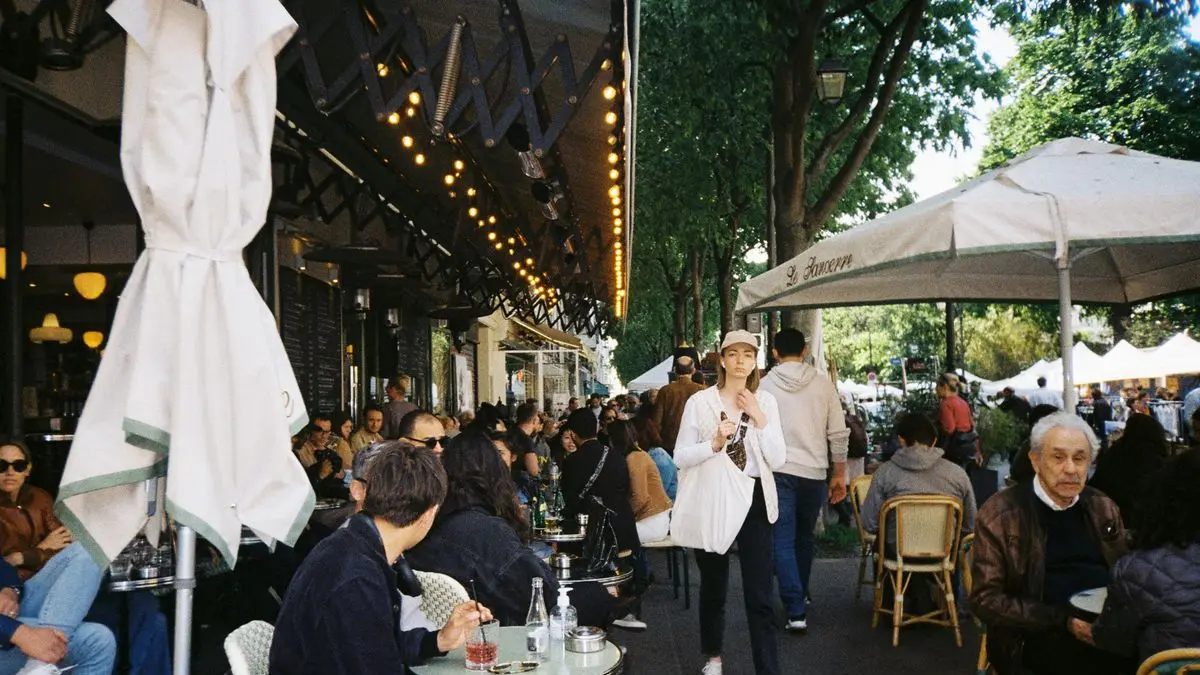
In Paris, a coffee is never just a drink. It is a rhythm, a stage set, a way of inhabiting the city. Around the Opera and the Grands Boulevards, the terrace becomes the perfect vantage point on the urban theatre. Here is how to enjoy it like a regular.
The Parisian cafe, a daily institution
In Paris, the cafe operates on two registers. There is the counter, where you knock back an espresso standing up, elbow on the zinc, a few words with the waiter before heading off; and there is the terrace, where you settle in and let time drift by. Both coexist in the same establishment, often at a different price depending on whether you drink at the bar or at a table, a perfectly normal custom worth knowing in advance.
The Grands Boulevards district is especially rich in cafes, a direct legacy of the nineteenth century, when these broad avenues concentrated fashionable life, theatres and the first department stores. People came to see and be seen, and that social function of the cafe endures. Even today, sitting on a terrace means taking a front-row seat at a permanent show: hurried passers-by, strollers, delivery riders, workers on a break.
The essential thing to grasp is that the Parisian cafe is never in a rush. A single order buys you the right to stay as long as you like, and no one will come to hurry you off the table. This deliberate slowness lies at the heart of the experience: you come as much for the atmosphere as for what is in your cup.
Choosing the right terrace
Not all terraces are equal, and the eye learns quickly. The first criterion is orientation: a terrace facing south or west will catch the afternoon sun, precious in a city where light must be earned. On the Grands Boulevards, whose layout is wide and open, some facades bask in sunshine for much of the day while others stay in the shade of the buildings.
The second criterion is the view. A terrace on the corner of a lively junction offers a continuous spectacle, while a more secluded spot, on a side street or near a covered passage, promises greater calm. Choose your mood: the bustle of the boulevard or the gentleness of a quiet street.
Finally, watch the clientele and the pace of a place before you sit down. A cafe full of regulars reading the paper or scribbling in a notebook usually has a soul; an establishment peopled only by visitors photographing their plates tells you more about its location than its quality. Trust your instinct and do not hesitate to walk a few steps further.
Understanding the codes: ordering and paying
Ordering coffee in Paris follows a small vocabulary worth mastering. Simply asking for a cafe will get you an espresso, short and strong, served in a small cup. If you prefer something longer and less concentrated, ask for a cafe allonge, made with more hot water. The cafe creme, more generous, is taken mostly in the morning, while a noisette is an espresso with a cloud of milk.
Service is at the table: no need to order at the counter if you are seated on the terrace, a waiter will come to you. You usually pay at the end, when you are ready to leave, by discreetly catching their eye. Many places accept cards, even for small amounts, but keeping a few coins on hand remains convenient.
As for tipping, the rule is simple and reassuring: service is already included in the displayed price, so you are under no obligation to leave more. It is nonetheless customary, if you enjoyed the service, to round up or leave a few coins on the saucer. A gesture that is appreciated, never demanded, and part of everyday courtesy.
The grand historic cafes of the boulevard
The Grands Boulevards gave rise to a certain idea of the grand Parisian cafe: vast rooms, velvet banquettes, mirrors, polished brass and chandeliers. These historic addresses, several dating from the Belle Epoque, cultivate a spectacular decor that is worth the detour in itself, even for a simple drink taken at the counter.
These cafe-brasseries stand out for their long opening hours and their versatility: you can have a coffee in the morning, lunch there, linger through the afternoon and dine in the evening. That continuity is part of their charm and their social role, that of an urban living room open to all. The decor tells of an era when the boulevard was the centre of gravity of Parisian life.
To make the most of them, simply push the door open and observe. Nothing obliges you to order lavishly: an espresso at the counter is enough to admire the mouldings and take in the atmosphere. It is often the best way to approach these legendary places without ceremony, as a curious traveller rather than a hurried customer.
The right time of day
Every hour has its cafe. In the morning, the counter comes alive with a rushed crowd downing an espresso before work; the mood is brisk, a little gruff, deeply Parisian. It is the ideal moment to take the pulse of the district and blend into its daily life, far from the tourist crush.
In the late morning and early afternoon, the terrace recovers its calm and becomes the best observation post. The light is beautiful, tables free up, and you can settle in unhurried with a book or a notebook. This is the hour of unabashed strolling, when the cafe becomes a genuine art of living rather than a functional break.
Late afternoon brings the hour of the aperitif, when terraces fill up again and the district tips towards evening. The Grands Boulevards, with their theatres and cinemas, come alive with a crowd having a drink before the show. Sitting down at that moment means catching the district at its liveliest, in the fading light.