Restoring Antique Parisian Ironwork: A Practical Care Guide
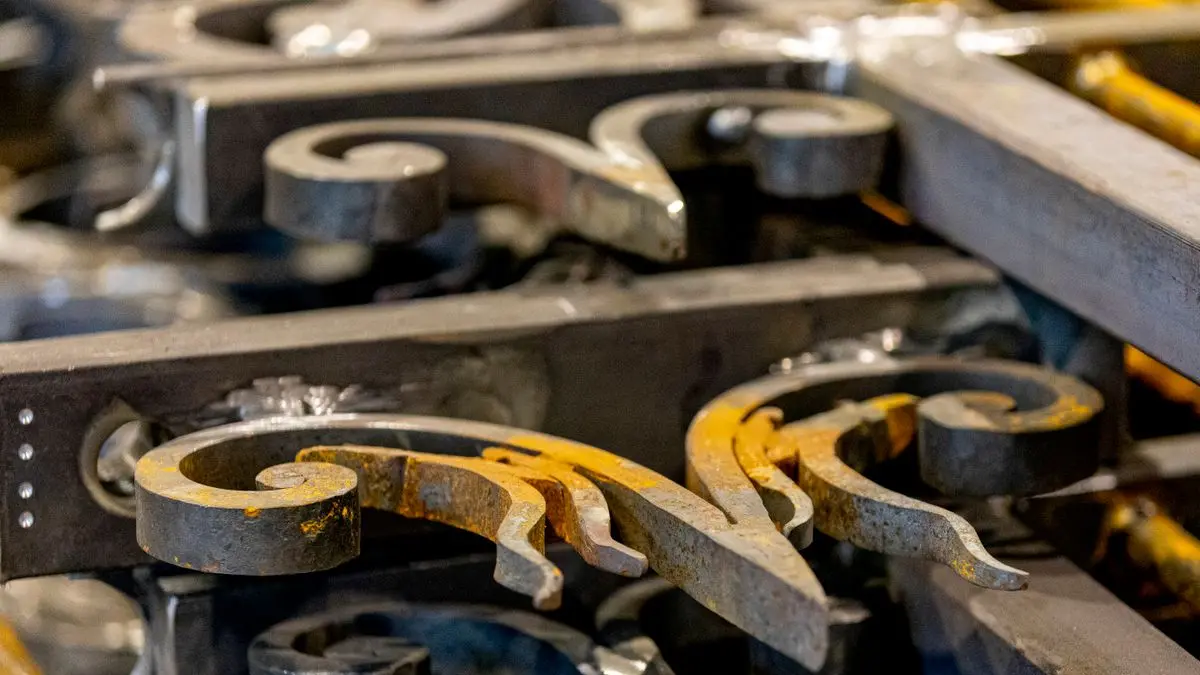
Around the Palais Garnier, wrought iron is more than decoration: it is a living heritage that ages, corrodes and needs care. Understanding rust, patina and the right techniques lets you preserve a Haussmann balcony or a Belle Époque gate for another century.
Understanding rust before you fight it
Rust is not mere grime: it is the slow transformation of iron in contact with damp air and city pollution. On the running balconies of Boulevard Haussmann or the rue de la Chaussée d’Antin, it settles first in the low points where water lingers, then creeps into the joints anchored in the stone. Spotting these vulnerable zones is the first instinct of good maintenance.
It helps to tell surface rust, the thin orange film that has not yet eaten into the metal, from deep, flaking rust that swells the iron and splits it open. The first is easy to treat; the second means taking the iron back to bare metal, and sometimes replacing a fragment. A gentle scrape with a fingernail is often enough to gauge how far the damage has gone.
One classic trap lies in the fixings. When iron rusts where it enters the dressed stone, it expands and cracks the stone around it. A Parisian balcony whose cornice is fracturing does not always suffer from failing stone, but often from hidden iron corroding within it.
Original patina or repaint: what should you keep?
Not all rust should be stripped away blindly. On an old railing, the patina, that dark and even surface born of time, is part of the object’s value. Aggressive stripping down to bright metal erases a history and can weaken the whole. The rule followed by Paris restoration workshops is simple: keep as much original material as possible.
Before any work, read the layers. A Haussmann balcony often carries several coats of paint, from an original dove grey to more recent repaints. Carefully probing these strata reveals the historic colour of the façade. Many buildings in the Opéra district had iron painted in deep, almost black greys, not the green sometimes applied by mistake.
The real question, then, is not only how to remove the rust but how far to go. You take off what threatens strength and the grip of the future coating; you keep what testifies to the age and the original design. This balance between conservation and repair is the heart of the craft.
The steps of a proper restoration
A serious restoration always follows the same sequence. You begin by cleaning off the grime, with a brush and water, to judge the true condition beneath the urban dirt. Then comes mechanical de-rusting, with a wire brush, a scraper or, for heavy cases, more advanced methods entrusted to a workshop. The aim is to reach sound iron, clean and dry.
Bare iron oxidises within hours, so protection must follow at once. You first apply a rust-inhibiting treatment, then a primer suited to old metal, before the finishing paint. Each coat must dry for the prescribed time; haste is the enemy of durability. A well-treated balcony is then sealed under a continuous protective film, free of gaps or blisters. If you find such work, find a wrought-iron craftsman near you and ask how they plan each stage.
For an element that is broken, bent or corroded to the point of endangering safety, restoration goes through the forge. Remaking a baluster like for like, rewelding a scroll or reforging a finial calls for a craftsman able to reproduce the gesture of the 1880s. Here skill moves beyond simple maintenance and meets art.
Paint and protection: the right choices to last
Paint is not only a matter of looks: it is the barrier that isolates iron from air and water. On outdoor work exposed to Parisian rain, favour systems designed for metal, applied in thin, even coats rather than one thick layer that will run and blister. Recesses, the undersides of handrails and the junctions with stone are the weak points you must never neglect.
The choice of colour deserves thought, especially in a heritage area. In the Opéra district, many façades fall under rules that encourage respect for the historic colours of the ironwork. Before painting a balcony bright blue, it is wise to check the original shade and, where relevant, ask the building manager or the city services: a discreet charcoal grey often serves the building better than a whim.
Light, regular upkeep beats a heavy restoration every thirty years. An annual inspection, a rinse with clean water, a touch-up of emerging rust spots as they appear: these simple gestures push back the day of major work. Well-tended iron ages slowly, like the stone that surrounds it.
Who to trust with a period balcony or gate
A homeowner can treat a small window guard, but a running balcony anchored into a façade is a job for a professional. The art blacksmith masters forging, welding and restoration alike; the metalworker handles the structures; some firms specialise in heritage and work at height, with scaffolding and safety in place. On a Haussmann building, exterior ironwork often concerns the entire co-ownership.
Before choosing, it is prudent to request several detailed quotes, to check references on comparable historic projects, and to make sure the craftsman knows how to work with respect for the original material. A good professional starts with an honest diagnosis: they will tell you what can be kept and what must be replaced, without pushing for total stripping when a targeted repair will do.
Finally, as soon as a building stands near a protected monument, as is the case around the Palais Garnier or the Place Vendôme, special planning rules may apply. Enquiring in advance avoids nasty surprises and ensures the restoration serves the iron, the façade and the whole district.