From Gare du Nord to the Opéra: Your Eurostar Arrival Made Easy
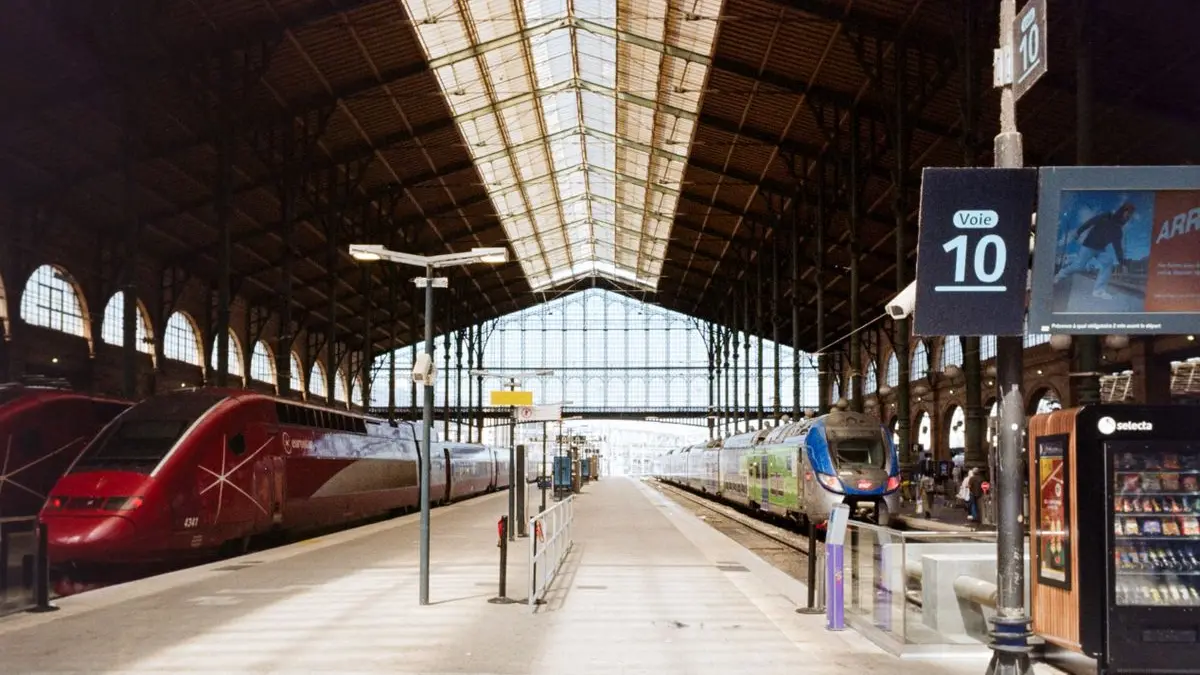
You have just stepped off the train at Gare du Nord after leaving London or Brussels, and one short leg still stands between you and your hotel. The good news: the Opéra district is only about ten minutes away. Here is how to cover that final stretch without stress, suitcases and all, and why staying near the Opéra Garnier makes any Eurostar trip so much simpler.
Gare du Nord, your gateway into Paris
The busiest railway station in Europe, Gare du Nord welcomes an endless stream of international travellers every day. This is where the Eurostar trains from London St Pancras pull in, alongside high-speed services from Brussels, Amsterdam and Cologne. Its grand nineteenth-century façade, crowned with statues representing the cities it serves, offers a first taste of the Haussmannian Paris you have come to explore.
As you leave the train, simply follow the signs for the Métro and the exit. The Eurostar terminal sits on the upper level, and a few minutes are enough to reach the vast main concourse. Take a moment to get your bearings: the station is large and lively, and it pays to move at a steady pace rather than rushing, especially with luggage in tow.
A guide’s tip: if you are travelling light, the walk to the métro is effortless. With larger cases, look out early for the escalators and lifts, which do exist but are sometimes set away from the main flow of people. Keep your travel pass to hand so you never have to stop in the middle of the crowd.
Reaching the Opéra by métro: the simplest route
From Gare du Nord, métro line 7 takes you straight into the heart of the Opéra district. Heading towards Villejuif or Mairie d’Ivry, only a handful of stops separate you from Opéra or Chaussée d’Antin – La Fayette, right beside the Galeries Lafayette. Allow about ten minutes for the ride, with no changes: this is the route I recommend to most travellers.
There is an alternative via the RER, but for a first journey with luggage the métro remains the easiest to follow. Buy a single ticket or a pass suited to the length of your stay; the ticket machines offer several languages, including English. Always validate your ticket at the entrance and keep it until you exit.
If you would rather skip the métro stairs altogether, a taxi or ride-hailing car will drop you at your door in fifteen to twenty minutes depending on traffic. It costs more, but it is a comfortable choice after a long journey. Taxi ranks are clearly signposted just outside the station.
Luggage and connections: the smart moves
The Paris métro is not always fitted with lifts, and some interchanges involve a few flights of steps. To keep effort to a minimum, choose a direct route such as line 7: fewer changes means fewer stairs and less fatigue. At Gare du Nord the métro entrance has escalators, but do plan ahead for carrying your heaviest bags.
Travel with luggage that is easy to handle: a wheeled case proves far more practical than a rigid holdall in the connecting corridors. Keep your travel documents, phone and a little cash in an accessible pocket, separate from everything else, so you never have to rummage at the wrong moment.
At peak times, in the morning and late afternoon, the platforms fill quickly. If your train arrives within those windows and you are not in a hurry, let the first train go and board the next, quieter one. Your stay begins far more pleasantly without the crush.
Why staying near the Opéra makes everything easier
Choosing accommodation in the Opéra district means securing a central address linked to Gare du Nord by a short, direct journey. Coming and going, you keep changes and travel time to a minimum, a real advantage on departure day when you have to factor in Eurostar check-in and a sensible safety margin.
The district also brings together much of what makes Paris so alluring: the Opéra Garnier, Charles Garnier’s masterpiece crowned by its ceiling painted by Marc Chagall; the Galeries Lafayette with their stained-glass dome of 1912 on the Boulevard Haussmann; the Grands Boulevards, the covered passages and the nearby Place Vendôme. You are perfectly placed to explore on foot without always relying on transport.
Finally, the area is superbly connected: the Opéra station links lines 3, 7 and 8, while Saint-Lazare, another major station, lies just minutes away. From this anchor point the whole of Paris opens up to you, and the return to Gare du Nord on your final day happens without any nasty surprises.
Departure day: catching the Eurostar with ease
The journey back to Gare du Nord is as simple as your arrival, but Eurostar check-in requires you to be there early: security checks and border formalities take a little time. Build in a comfortable margin and leave the Opéra district in good time, especially during busy periods.
From the Opéra, take line 7 in the opposite direction: a few stops and you are back at Gare du Nord. Scout out the entrance to the Eurostar terminal, on the upper level of the station, the day before so you lose no time on the morning of departure. A valid métro ticket and your travel documents to hand are all you need to travel with a clear mind.
One last piece of advice: keep a little time in reserve for a final coffee on a terrace or a last look along the Boulevard Haussmann. Staying near the Opéra is precisely what lets you enjoy these final Parisian pleasures without ever chasing your train.