Belle Époque Charm Hotels: the Art of 1900 in the Heart of the Opéra
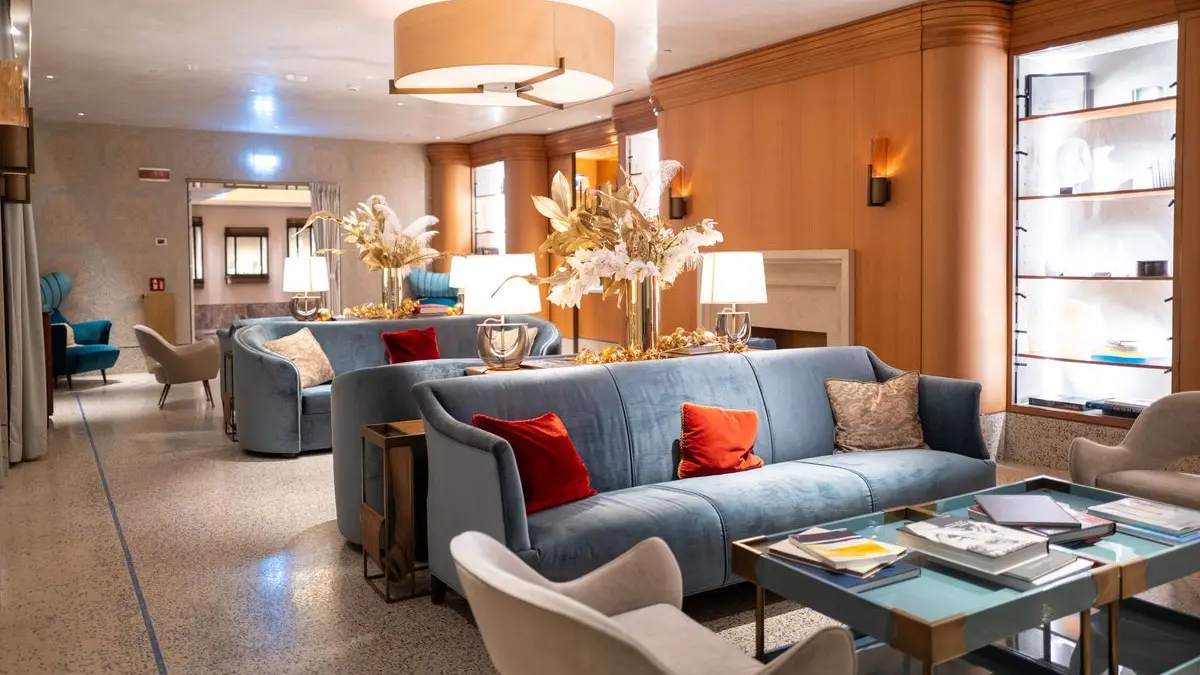
Some hotels do more than put you up for the night: they carry you back to the Paris of 1900. Behind a Haussmann façade, beneath the mouldings and the gilding, the Belle Époque spirit lives in every detail. The Opéra district, the natural setting for this elegance, holds its finest examples. Here is how to recognise the style and choose it like a connoisseur.
What exactly is a Belle Époque hotel?
The Belle Époque, literally the beautiful era, spans the carefree, opulent decades that run roughly from 1871 to 1914. This was the Paris of world fairs, of the cancan, of the first métro lines and of triumphant electric light. A charm hotel that claims this heritage cultivates a precise aesthetic: the measured opulence of a middle class that loved to entertain and to be seen.
In practice, the Belle Époque mood is recognisable by a decorative vocabulary all its own. High ceilings dressed with plaster mouldings, central ceiling roses above the drawing rooms, finely worked cornices, and herringbone parquet that creaks gently underfoot. Light plays a leading role here, filtered through tall windows and multiplied by bevelled mirrors.
This style should not be confused with the austere classicism of the previous century, nor with contemporary minimalism. It embraces decoration, texture and ornament. Yet a successful Belle Époque hotel is never cluttered: it orchestrates luxury like a hushed conversation, in which each element answers another.
The Haussmann interior, backbone of the style
You cannot understand the Belle Époque hotel without the Haussmann building that houses it. Under the Second Empire, Baron Haussmann redrew Paris as broad avenues lined with dressed-stone buildings, their façades punctuated by long wrought-iron balconies and tall windows. It is this architecture that gives the hotels their generous proportions and their light.
Inside, the Haussmann signature shows in the enfilade of connecting rooms, ceiling heights often close to three metres, marble fireplaces and double-leaf doors. Many of the district’s charm hotels occupy former apartment buildings or private mansions whose original mouldings have been preserved and carefully restored.
Looking for a Belle Époque hotel therefore begins with spotting these pale-stone buildings. The stairwell, with its wrought-iron banister and red carpet, often sets the tone the moment you step in. A good establishment plays on this heritage without freezing it, marrying today’s comfort with yesterday’s bones.
Mouldings, gilding, velvet: the grammar of 1900 décor
Three materials sum up the Belle Époque soul. First plaster, sculpted into mouldings, friezes and ceiling roses that give structure to walls and ceilings. Then gilding, gold leaf on cornices, frames and light fittings, catching the light and warming every tone. And finally velvet, on the low tub chairs, the heavy curtains and the buttoned headboards.
To these essentials add crystal-drop chandeliers, bronze wall sconces, floral or damask wallpapers, and thick rugs that soften every step. Antique furniture, inlaid chests, pedestal tables and cheval mirrors, converses with contemporary touches to avoid the museum effect. The palette favours deep tones: burgundy, bottle green and peacock blue, lifted with gold.
Art Nouveau, a contemporary of the Belle Époque, sometimes slips its plant-like curves into the scheme: scrolling ironwork, coloured stained glass and nature-inspired motifs. The métro entrances designed by Hector Guimard, still visible around Paris, remain its most famous emblem. A hotel that quotes these curves fully signals its 1900 roots.
Why the Opéra district is so full of them
It is no accident that the Opéra district holds so many Belle Époque charm hotels. At the heart of the 9th arrondissement, it was one of Haussmann’s great building sites and the theatre of Parisian high society in the late nineteenth century. The Opéra Garnier, opened in 1875 and designed by Charles Garnier, is its flagship monument, with its grand staircase, its gilding and its ceiling painted by Marc Chagall in 1964.
All around, everything breathes that age of prosperity. The Boulevard Haussmann has housed the celebrated Art Nouveau stained-glass dome of the Galeries Lafayette since 1912, while the neighbouring department stores invented modern retail. The Grands Boulevards, the covered passages, the cafés and the theatres formed the backdrop for a bourgeoisie that had turned strolling into an art of living.
This dense fabric of Haussmann buildings, a short walk from the Place Vendôme and its jewellers, naturally welcomed hotels of character. Many discreet addresses tuck themselves into the quiet streets between the Opéra and the Saint-Lazare and Gare du Nord stations, offering 1900 charm just minutes from the major sights.
How to recognise a genuine Belle Époque charm hotel
Be wary of surface décor: a genuine Belle Époque charm hotel gives itself away through the coherence of the whole. Look at the stone façade, the wrought-iron balconies, the height of the windows. In the lobby, watch for original mouldings, an old staircase, a wood-panelled or ironwork lift cabin, and a reception that does not resemble a standardised counter.
In the rooms, the signs are unmistakable: high ceilings, cornices, old parquet, a decorative fireplace here and there, antique furniture and fine textiles. A good establishment also looks after its shared spaces, a reading lounge, a hushed bar, a breakfast room beneath a glass roof, because that is where the 1900 spirit lingers. Warm light and soft acoustics are part of the experience.
Balance is the key. A successful hotel combines this historic setting with the comforts expected today: quality bedding, a modern bathroom, a reliable connection and discreet air conditioning. Charm never excuses the loss of contemporary standards; it simply dresses them in a soul.
Choosing well: a guide’s pointers
To choose your Belle Époque charm hotel, start with location. The Opéra district is an ideal base: central, well served by the métro (lines 3, 7, 8 and 9 all meet around the Opéra) and close to the Louvre, the department stores and the theatres. A quiet street set back from the boulevards will guarantee peaceful nights without sacrificing convenience.
Next, study the photographs with your newly trained eye: look for mouldings, natural light and a coherent scheme. Authentic charm shows in the shared spaces as much as in the rooms. Rates vary with the season and are best checked in real time; compare on equal category and location rather than on the headline price alone.
Finally, let the intention of the place guide you. A Belle Époque hotel is not merely a décor: it is a way of living Paris, between two visits, over tea in the lounge or a drink beneath the gilding. To choose this atmosphere is to extend your stay into the story of a city that, right here, has kept the memory of its most beautiful era intact.