Art Deco in Parisian Hospitality: the Elegance of the Roaring Twenties
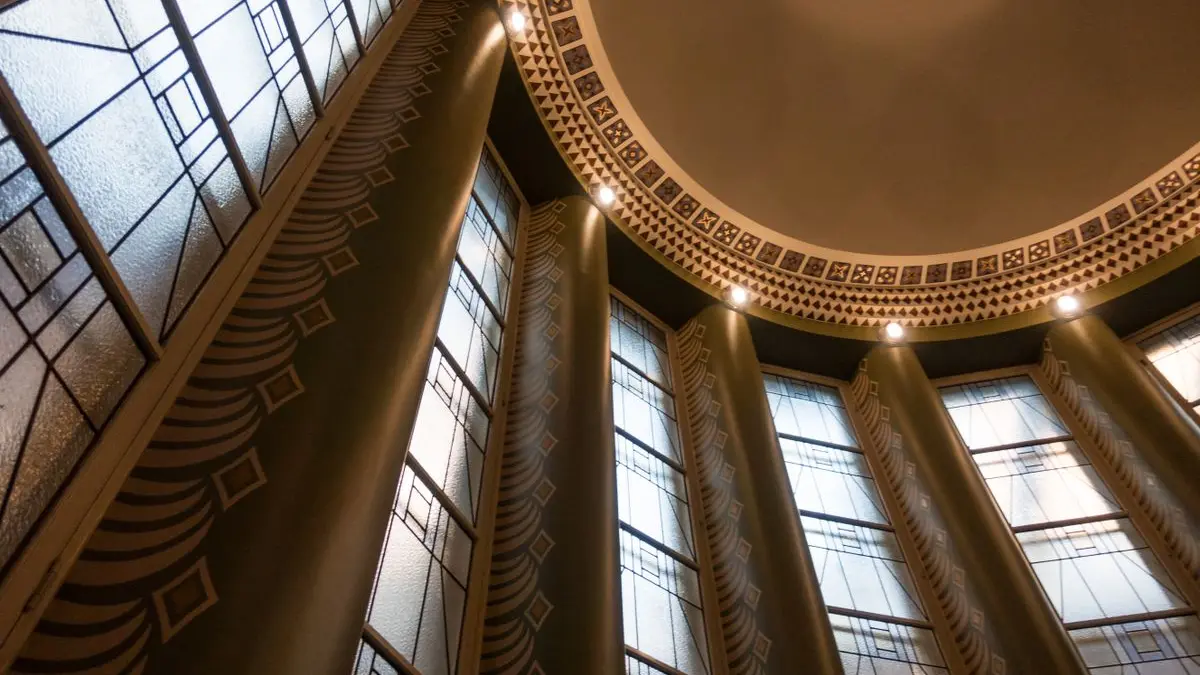
Born in the Paris of the Roaring Twenties, Art Deco left a lasting mark on the city’s architecture, furniture and art of hospitality. Geometric lines, deep lacquer, precious marquetry and soft, filtered light: this decorative language still runs through the Opéra district. Follow the guide on the trail of a style that began just a few streets away, and discover where its spirit lives on today.
The birth of a style in the Paris of the 1920s
Art Deco takes its name from the International Exhibition of Modern Decorative and Industrial Arts, held in Paris in 1925 between the Esplanade des Invalides and the Grand Palais. This lavish event crowned an aesthetic that had been taking shape since the 1910s and would go on to influence the whole world for two decades.
In reaction to the trailing plant forms of Art Nouveau, the new style chose rigour: geometric shapes, symmetry, crisp volumes and stylised motifs drawn from speed, the rising sun and the clean lines of the machine. The exuberant, cosmopolitan Twenties found their perfect mirror in it, amid jazz, transatlantic liners and gleaming automobiles.
Paris was its laboratory. Cabinetmakers, ironworkers, lacquerers and glassmakers vied in daring here, making the city the world capital of the decorative arts. The Opéra district, the fashionable commercial heart of the Right Bank, saw shopfronts, brasseries and department stores blossom at the cutting edge of this elegant modernity.
Geometric lines, lacquer and marquetry: the Art Deco vocabulary
Art Deco decoration is recognised first by its geometry: chevrons, stepped forms, stylised fans, circles and octagons repeat in rhythmic friezes. The sunburst motif, echoed on grilles, doors and headboards, has become its most instantly recognisable emblem.
The materials, meanwhile, play the card of controlled luxury. Chinese lacquer, patiently polished to a deep black or a blood red, clothes furniture and folding screens. Marquetry combines precious woods, mother-of-pearl, shagreen and vegetable ivory in intricate compositions. Gilt bronze, hammered wrought iron, engraved glass and bevelled mirrors complete a palette in which every surface catches the light.
The furniture favours low lines and generous curves, deep armchairs and rounded console tables. Nothing is left to chance: handles, wall lights and rugs with Cubist patterns all belong to a scheme conceived as a total work, in which the decorative arts become a whole way of living.
When Parisian hotels embraced Art Deco
Hospitality was one of this style’s favourite fields of expression. In the age of grand travel by train and ocean liner, the hotel became a showcase of French elegance: the lobby, the bar and the staircase turned into stage sets where the traveller stepped into a carefully composed world the moment the threshold was crossed.
The codes are applied with real coherence. Marble floors with geometric patterns, glass roofs and skylights casting an even glow, finely worked ironwork on banisters and lifts, lacquered panelling and moulded-glass lighting create an atmosphere at once hushed and theatrical. Modern comfort here meets decorative refinement.
This heritage is no frozen stage set. Many Parisian addresses carry on, in their public spaces and their rooms alike, the same pursuit of harmony between geometry, fine materials and gentle light. Without ever slipping into nostalgia, the spirit of the Roaring Twenties remains a promise of elegance.
On the Art Deco trail around the Opéra
The Opéra district offers the curious walker a genuine open-air lesson in style. The Grands Boulevards, the artery of fashionable Parisian life, still preserve façades, signs and lobbies where the geometry of the Twenties can be read, between historic brasseries and period cinemas with their spectacular canopies.
The department stores of the Boulevard Haussmann extend this dialogue between styles. While the famous glass dome of the Galeries Lafayette, unveiled in 1912, belongs to a flamboyant Art Nouveau, it opened the way to a decorative modernity of which Art Deco was the natural continuation a decade later, in the window displays and interiors of the neighbourhood.
A few steps away, the Place Vendôme and its jewellers, the covered passages with their old shopfronts, and the métro entrances with their worked ironwork trace a route where the trained eye spots a thousand geometric details. A simple stroll is enough to measure how deeply this style shaped the face of the Right Bank.
Recognising an authentic Art Deco interior
To tell Art Deco apart from its neighbours, a few markers are enough. Where Art Nouveau ripples and draws on nature, Art Deco geometrises and stylises; where Haussmann-era classicism multiplies mouldings and garlands, Art Deco pares down and gives rhythm. Symmetry and the repetition of a single motif are almost always the rule.
Look at the floors: mosaics and marble form chequerboards, chevron friezes or radiating rosettes. Look up at the lighting: moulded glass, often signed by the great glassmakers of the day, diffuses a milky light through stepped shapes. The ironwork, finally, draws stylised scrolls and fans that reappear on grilles, doors and banisters.
In a room or lounge of Art Deco inspiration, look for coherence: a curved headboard, bronze wall lights, a rug with Cubist patterns and a sober palette of black, gold and deep tones signal the spirit of the style far better than any single object.
Living the Art Deco spirit on a stay near the Opéra
To stay in the Opéra district is to lodge at the heart of the elegant Paris that gave birth to Art Deco. The traveller alert to beautiful materials and disciplined lines will find, in the architecture of the buildings as much as in the local art of welcome, a constant echo of the golden age of the Roaring Twenties.
The neighbourhood lends itself perfectly to exploration on foot. The Opéra Garnier, Charles Garnier’s masterpiece crowned by the ceiling painted by Marc Chagall, marks its nerve centre. From there the Opéra, Chaussée d’Antin and Havre-Caumartin stations serve métro lines 3, 7, 8 and 9, while the Saint-Lazare and Gare du Nord stations connect the rest of the city and the main lines within minutes.
A guide’s tip: take the time to look up and to push open doors. A marble lobby, a wrought-iron banister, a geometric glass roof say a great deal about the history of a place. As the rates of the district’s accommodation change in real time with the season, it pays to compare calmly, so as to combine a prime location with an atmosphere worthy of the setting.